

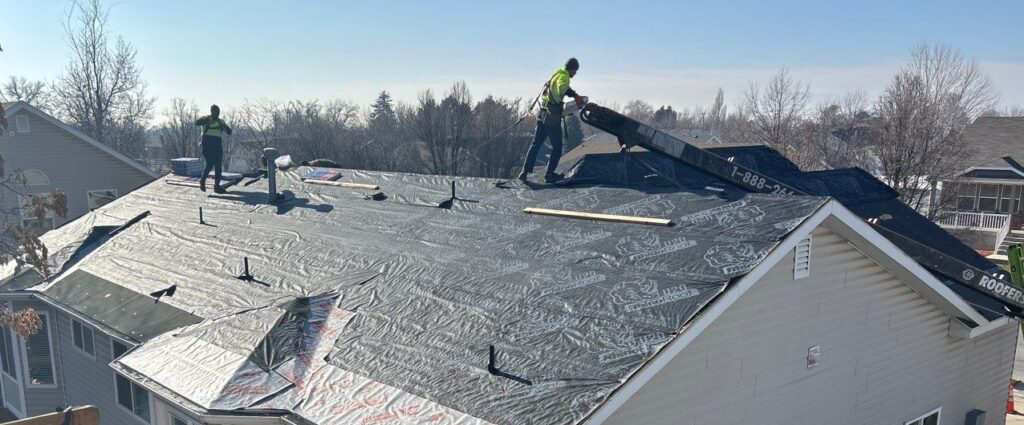
While it’s not the most exciting part of your roof, underlayment is an absolutely essential component with an important job. Installed directly onto the roof deck and covered by the shingles, it acts as a second line of defense against moisture and protects your roof from the elements.
At Kanga Roof, we know that when you fully understand your roof, you’re better equipped to take proper care of it and keep it in optimal condition for years to come. Keep reading to learn what roofing underlayment is, the different types to choose from, and why it matters.
What Is Roofing Underlayment, and Why Does It Matter?
First, let’s define roofing underlayment. Essentially, it’s a water-resistant or waterproof barrier installed directly onto the roof deck that lays underneath the primary roofing material — shingles, metal, tile, etc. It resembles a large sheet of fabric or plastic and is typically sold in rolls.
You may be wondering why it matters. After all, the underlayment layer gets covered by the shingles, anyway, right? The truth is that your roof has to be able to withstand all kinds of stuff. From heavy rain and snow to gusts of wind to beating sun, your roof is responsible for protecting you and your home from the elements.
Underlayment acts as an extra protective layer between the roof decking and outer roofing material just in case the shingles are damaged or blown off. It also shields the roof deck from water that seeps underneath the shingles, like with wind-driven rain.
By resisting water, this extra layer helps prevent mold, rot, and structural damage, so you can avoid the stress and cost of major roof repairs. For this reason, underlayment is required by most building codes and roofing manufacturers.
Types of Roofing Underlayment
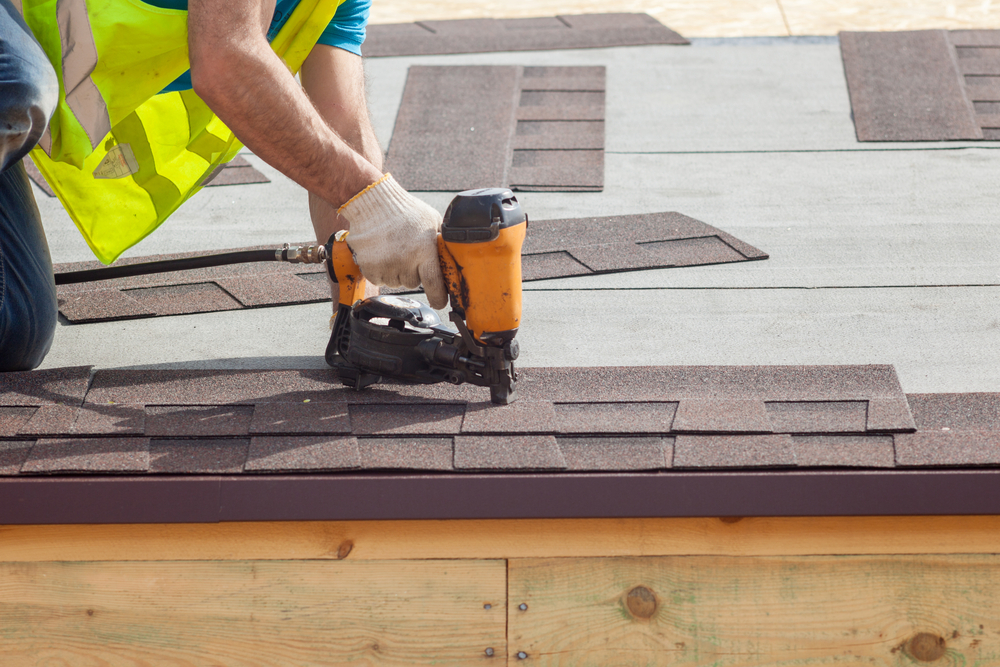
Not all underlayment is the same. There are a few different types to choose from, each with its distinct benefits, drawbacks, and ideal use cases.
Asphalt-Saturated Felt
Asphalt-saturated felt, also known as traditional felt paper, is made from an organic or fiberglass base that’s been saturated in asphalt to make it more durable and water-resistant. It comes in 15-pound and 30-pound weights, with the 30-pound option being more damage-resistant and long-lasting.
Asphalt-saturated felt is the most affordable option, and it’s widely used in residential roofing. However, it’s less durable over time than other materials, and it’s not completely waterproof.
Rubberized Asphalt
Rubberized asphalt contains higher percentages of asphalt and rubber polymers than asphalt-saturated felt. It’s usually self-adhering, and since it’s waterproof, it’s ideal for vulnerable areas of the roof like valleys and eaves. It may come with a higher upfront cost, but it can save you money in the long run on repairs and replacement.
Synthetic
Synthetic underlayment is made from polypropylene or polyethylene. It’s lightweight, tear-resistant, and water-resistant, UV-resistant, and easy to install. However, it’s typically more expensive than other materials, making it not ideal for homeowners on a budget.
How to Choose the Right Option
As you consider your underlayment options for your new roof, there are a few things to keep in mind. First, consider the local climate and weather conditions. If it’s a dry climate, you may not need premium waterproof materials. If it rains or snows a lot, it may be worth the extra cost to go for rubberized asphalt or synthetic underlayment.
You should also take into account your roof’s slope and design. Consider using more durable materials in valleys and along eaves to add extra protection to vulnerable areas.
There’s also the local building codes and manufacturer warranty requirements. These standards may limit your choices, as will the type of roofing material used. Certain types of underlayment work better with asphalt, metal, or tile.
Talk to your roofing contractor about what type of material they recommend and why. Working together, you can come up with a solution that meets your needs.
Professional Installation Matters
As with all roofing projects, proper installation is the only way to ensure full protection. When you attempt to install underlayment yourself, you risk water infiltration and all the problems that come with it. It’s much smarter to hire a certified roofing contractor with extensive experience.
At Kanga Roof, we’re prepared to take on any roofing challenge that comes our way. Whether it’s installing a roof on a new construction project, replacing damaged shingles, or performing repairs after a storm, we’re here for you. Contact us today for an inspection or quote on a new roof with the right underlayment.
Follow Us