

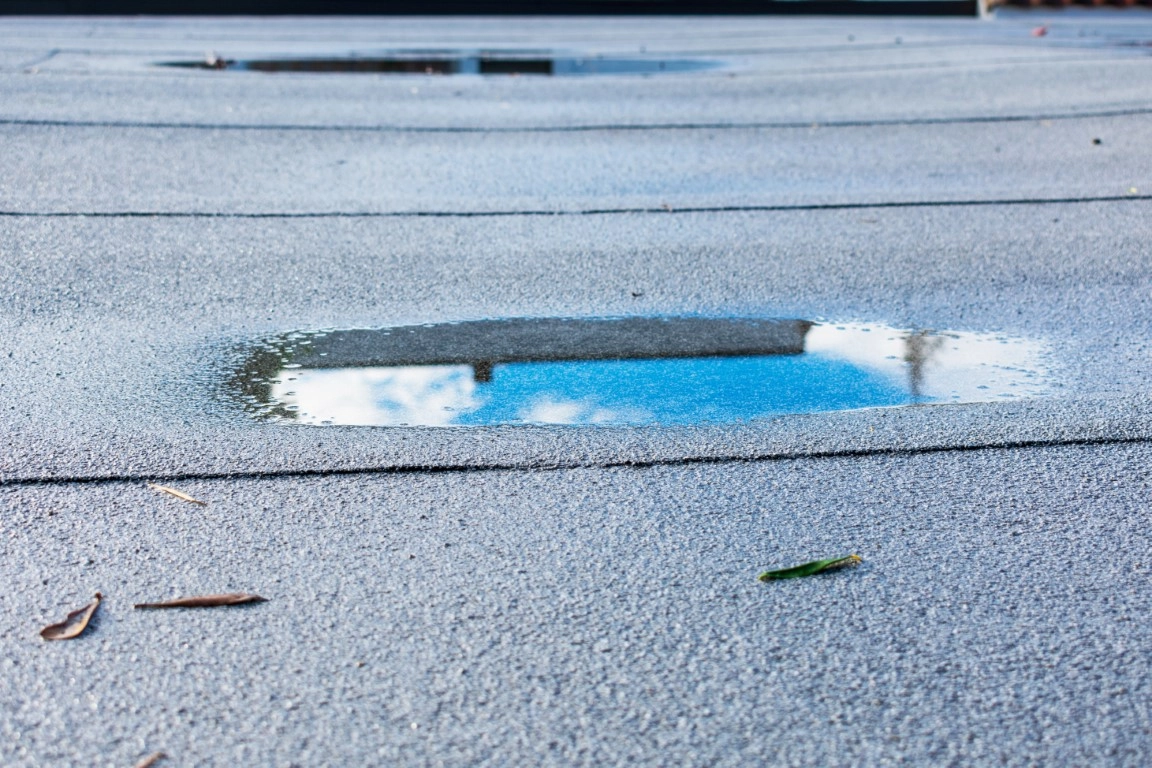
Roof pooling (also known as ponding) is exactly what it sounds like: when water accumulates on the roof. This occurs most commonly on flat or low-slope roofs, but it can happen on other roofs, as well.
Pooling water should never be ignored because it can shorten the roof’s lifespan and lead to leaks or structural damage. As soon as you notice water pooling on your roof, call a professional like Kanga Roof for an inspection to get to the bottom of the issue and prevent any lasting damage.
If water is pooling on your roof, keep reading to learn why this happens, why it’s a problem, what to do next, and how to prevent future roof pooling.
What Is Roof Ponding?
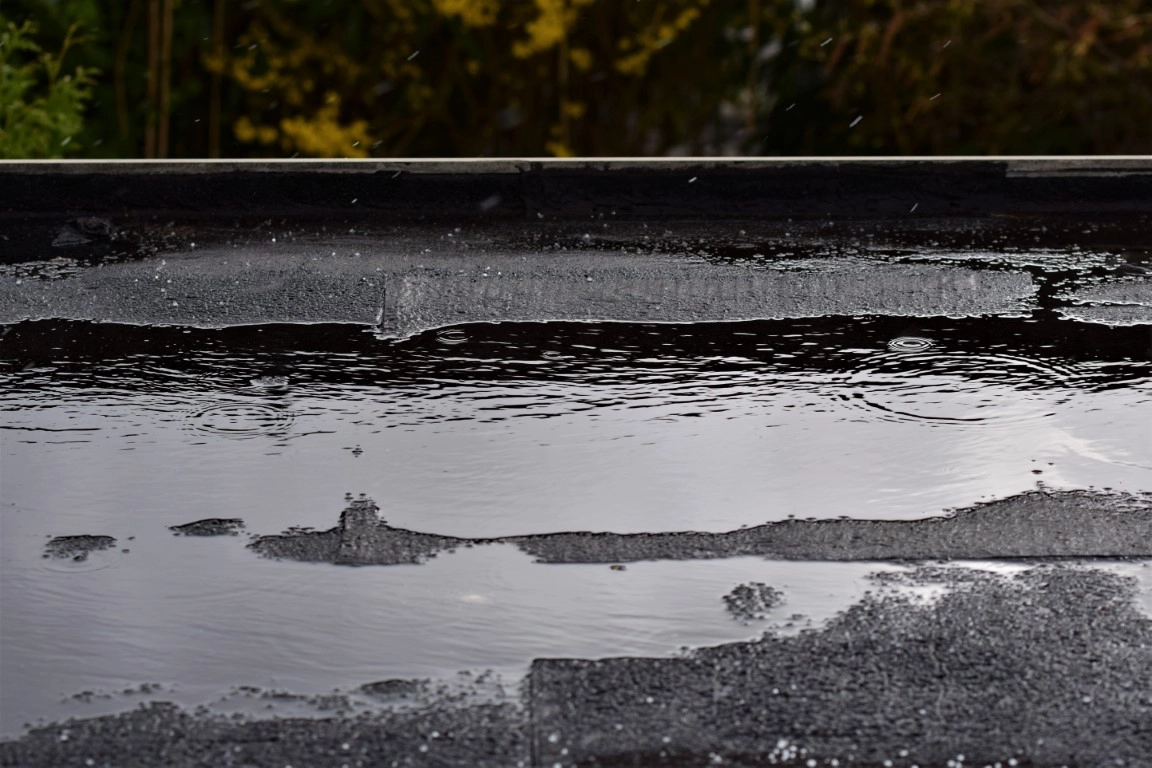
Ponding or pooling occurs when water remains on the roof for more than 48 hours after it rains. It’s different from a temporary puddle that goes away once the storm passes — it signals a deeper issue, like ongoing drainage problems. The roof types most commonly affected include flat commercial roofs, low-slope residential roofs, older roofs with sagging areas, and roofs with clogged drainage systems.
Common Causes of Water Pooling on a Roof
Let’s take a look at some common causes of water pooling on a roof:
- Poor roof drainage: Clogged gutters and downspouts, blocked roof drains, or improper drainage design means rainwater has nowhere to go.
- Roof sagging or structural issues: Aging roof decking, damaged support structures, or improper installation can create sagging areas that collect rainwater.
- Debris accumulation: Leaves, branches, and dirt can trap water on the roof, and moss or algae buildup can create drainage barriers.
- Improper roof slope: Design, construction, or installation errors can result in an improper roof slope that doesn’t allow for proper drainage.
- Damaged roofing materials: Cracking, deterioration, separated seams, and blistering membranes can all cause water pooling.
Why Pooling Water Is a Serious Problem
Pooling water is a serious problem that requires prompt attention. The longer the water sits on the roof, the higher the risk of moisture penetrating flashing, seams, damaged areas, or other weak points, causing structural damage. When water seeps into the insulation, your HVAC system will have to work harder to keep your home at a comfortable temperature, leading to decreased energy efficiency.
Furthermore, standing water weakens roofing materials like shingles and membranes, which means they deteriorate faster. Plus, the added weight of the water puts stress on the roof, increasing the risk of sagging or even collapse.
Additionally, excess moisture on the roof creates the perfect environment for mold and mildew to thrive. Not only does this damage your roof, but it can potentially lead to indoor air quality concerns if it spreads.
Immediate Steps to Take if You Notice Pooling Water
If you notice water pooling on your roof after a storm, here are some immediate steps to take:
- Inspect the area safely: Inspect the roof from the ground if possible, looking for visible debris or drainage blockages. Avoid walking on wet or unstable roofs.
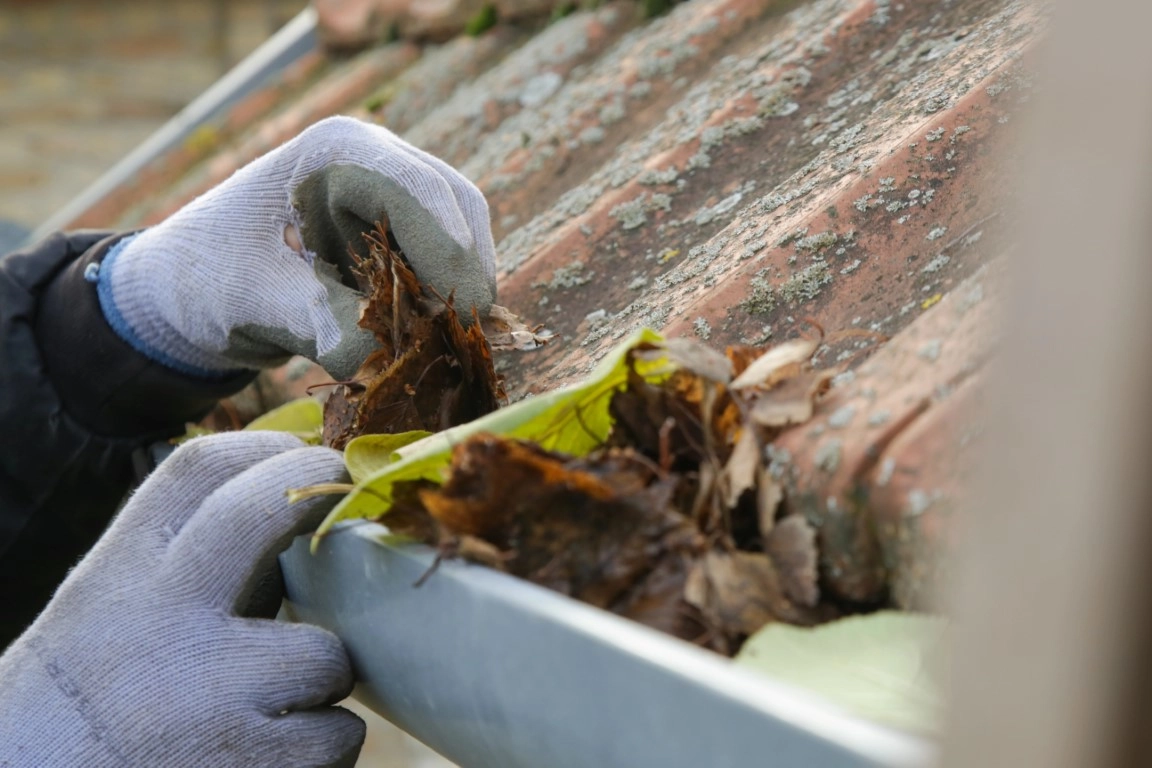
- Remove debris: If it can be done safely, remove debris from gutters and drains to clean blockages.
- Document the problem: Take plenty of pictures of the ponding areas for insurance or warranty claims.
- Check for interior signs of water damage: Check the inside of your home for signs of water damage, including water stains on the ceiling, peeling paint, musty odors, or damp attic insulation.
- Contact a professional roofing contractor: DIY repairs can worsen the issue. Contact a roofing contractor for a professional diagnosis and expert repairs.
How Roofing Professionals Fix Pooling Water Problems
Depending on the root cause of the issue, roofing professionals may clean and restore the gutters and drains, repair low spots to relevel the roof, replace damaged roofing materials, or reinforce roof decking or supports. In some cases when the damage is severe, a full roof replacement may be necessary.
Tips for Preventing Future Roof Ponding
To prevent future issues with water pooling on your roof, make sure you:
- Schedule regular roof inspections
- Keep gutters and drains clear to prevent debris buildup
- Trim nearby trees to reduce leaves and branches
- Address small roofing issues early before they have the chance to worsen
- Monitor areas with previous ponding
- Invest in preventative maintenance, such as roof coatings and drainage improvements
Trust the Roofing Experts at Kanga Roof
If you’ve noticed water pooling on your roof, don’t let it cause major problems — contact Kanga Roof right away for an expert inspection and targeted maintenance and repairs. We’ll get your roof squared away so that the next time it rains, you don’t have to worry about moisture damage.

Follow Us